
Slow Cooker Chicken Thighs Low Sodium: How to Cook Them By Chef Emma
Slow cooker chicken thighs can be low sodium if you skip the seasoning packet, use fresh or frozen plain thighs, and build flavor with garlic, herbs, and a little acid instead of salt. A 2-pound batch needs 4 to 5 hours on low, and the sodium comes mostly from what you add, not the chicken itself.
Why Chicken Thighs Work Well Here
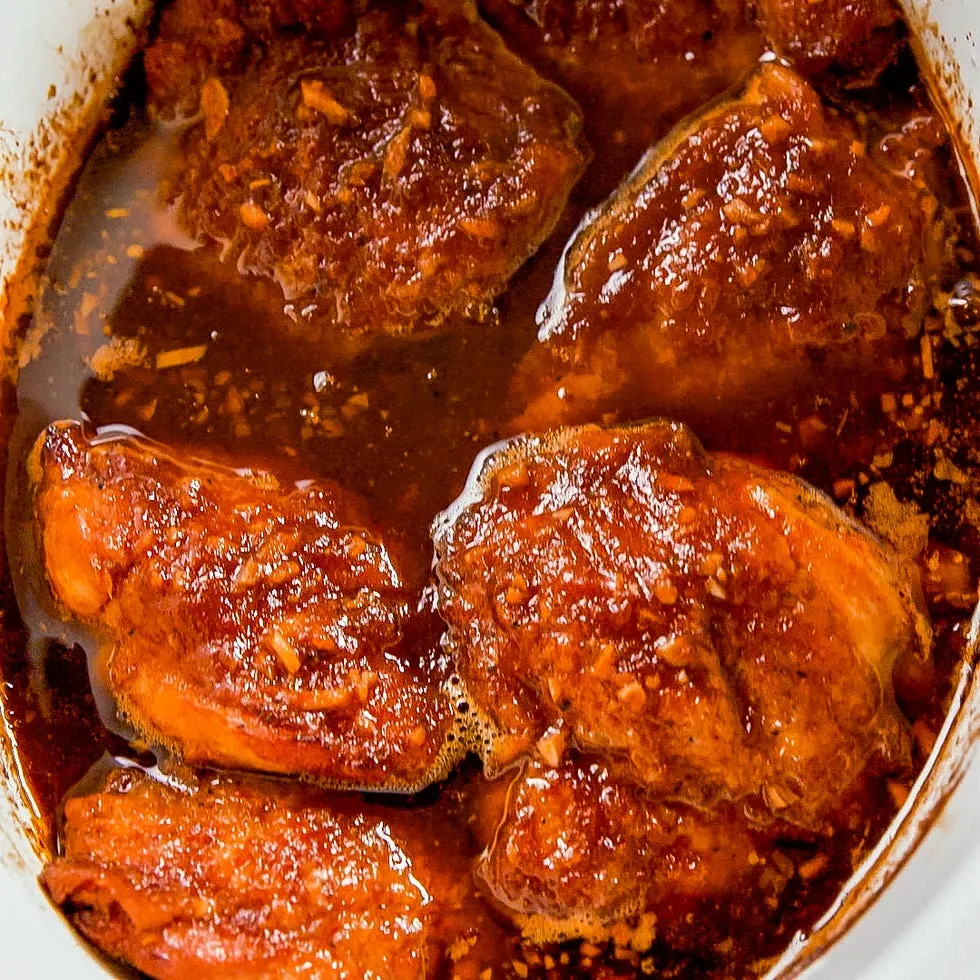
Chicken thighs stay juicy even after hours of cooking, so you don’t need salt to keep them tender. They have more fat than breasts, which means they don’t dry out and turn stringy the way lean meat can in a slow cooker.
Plain raw chicken thighs have only a small amount of natural sodium — around 70 to 90 mg per 3-ounce serving. Almost all the sodium in a typical slow cooker recipe comes from broth, soy sauce, seasoning mixes, or canned soup. Cut those out and you control the number yourself.
I’ve cooked thighs this way for years, both in restaurant kitchens and now at home. The trick isn’t hiding the missing salt — it’s replacing it with something that tastes like it belongs.
Tip: Brown the thighs in a hot pan for 2 to 3 minutes per side before they go in the slow cooker. That crust adds flavor that salt would normally provide.
How to Make Low Sodium Slow Cooker Chicken Thighs
- Pat the thighs dry and brown them. Heat a skillet over medium-high heat. Sear 2 pounds of bone-in or boneless thighs for 2 to 3 minutes per side until golden. This step is optional but improves taste a lot.
- Layer the bottom of the slow cooker. Spread sliced onion, 4 smashed garlic cloves, and a few sprigs of fresh thyme or rosemary across the base. These sit under the chicken and flavor the juices.
- Add the chicken and liquid. Place the thighs on top. Pour in 1/2 cup of unsalted chicken broth or water. Don’t add salt here — you’ll adjust at the end.
- Cook on low for 4 to 5 hours. Bone-in thighs take closer to 5 hours; boneless finish nearer 4. Cook on high only if you’re short on time, for 2 to 3 hours.
- Finish with acid and pepper. Pull the chicken out, then stir 1 tablespoon of lemon juice or vinegar into the pan juices. Taste the sauce, not the raw meat, and add a pinch of salt only if it truly needs it.
The acid step matters more than people expect. Lemon, lime, or a splash of vinegar wakes up the flavor in a way that salt can’t replace on its own.
Sodium Numbers You Can Actually Use
Here’s what different choices do to the final sodium count per serving. These are estimates based on standard product labels, so check your own packages.
| What you add | Sodium per serving | Notes |
|---|---|---|
| No-salt broth, garlic, herbs, lemon | About 90–120 mg | Lowest option |
| Unsalted broth + 1 tbsp low-sodium soy sauce | About 250–300 mg | Adds depth |
| Regular chicken broth (1 cup) | About 500–600 mg | Check the label |
| Seasoning packet or canned soup | 800 mg or more | Avoid for low sodium |
A “low sodium” food label means 140 mg or less per serving, according to the FDA sodium labeling rules. If you’re cooking for someone on a strict limit, aim for the top row.
Mistakes That Raise the Sodium Without You Noticing
The biggest one is assuming “reduced sodium” broth is actually low. Many brands still carry 400 to 500 mg per cup — that’s a big chunk of a daily limit in one pour.
Another common slip: adding salt early “to let it soak in.” In a slow cooker, the liquid concentrates as it cooks, so early salt becomes stronger-tasting salt later. Wait until the end.
Watch out for bottled marinades, bouillon cubes, and rotisserie-style seasoning blends too. They hide sodium in small amounts that add up fast across a whole batch.
Tip: If your sauce tastes flat without salt, add a squeeze of lemon and a crack of black pepper first. Give it 30 seconds, then taste again before reaching for the salt shaker.
When to Skip This Method
If you’re cooking for someone with a medical sodium restriction, check with their doctor or dietitian before relying on any home recipe. Kidney and heart conditions can change the safe daily amount, and only their care team knows the right target.
Also skip the slow cooker if you want crispy skin — it won’t happen. The skin turns soft and releases fat into the sauce. For crisp skin, finish the thighs under a broiler for 3 to 4 minutes after slow cooking.
Related guides
- What Is the First Thing to Cook in a New Air Fryer? A Beginner’s Guide by Chef Emma
- Can You Cook Raw Chicken in an Air Fryer?
- Can I Wrap Chicken in Foil in an Air Fryer?
Frequently Asked Questions
Can I use frozen chicken thighs in the slow cooker?
No — USDA food safety guidance says frozen poultry shouldn’t be cooked in a slow cooker, because it spends too long in the unsafe temperature range; thaw it in the refrigerator first, then cook until it reaches 165°F internally. Frozen thighs release more liquid, so your sauce will be thinner. You can thicken it at the end by simmering the juices in a small pan.
Is bone-in or boneless better for low sodium cooking?
Bone-in thighs have more flavor on their own, which helps when you’re cutting salt. Boneless cook faster and are easier to shred. Either works — just adjust the time and check doneness with a thermometer.
How long do leftovers keep?
Store them in the fridge within 2 hours of cooking and eat within 3 to 4 days. Reheat gently with a splash of water so they don’t dry out. The flavor often improves on day two as the herbs settle in.
Conclusion
Start your next batch with unsalted broth, plenty of garlic, and a squeeze of lemon at the end — then taste before you decide whether it needs anything more. Once you’ve made it twice, you’ll know your own salt threshold, and you can adjust the whole recipe around it.

I’m passionate about helping home cooks make everyday cooking easier, smarter, and more enjoyable. I share practical kitchen tips, cookware guides, cooking tutorials, and simple recipe inspiration based on real kitchen experience and modern home cooking needs.