
What Temperature to Bake Chicken Thighs for Juicy Results
Bake chicken thighs at 400°F (205°C) for 35 to 45 minutes. That heat gives you crispy skin and meat that stays juicy. Dark meat has more fat than chicken breast, so it forgives a little extra time in the oven. Pull the thighs out when the thickest part reads 175°F on a meat thermometer.
Why 400°F Works Better Than Lower Heat
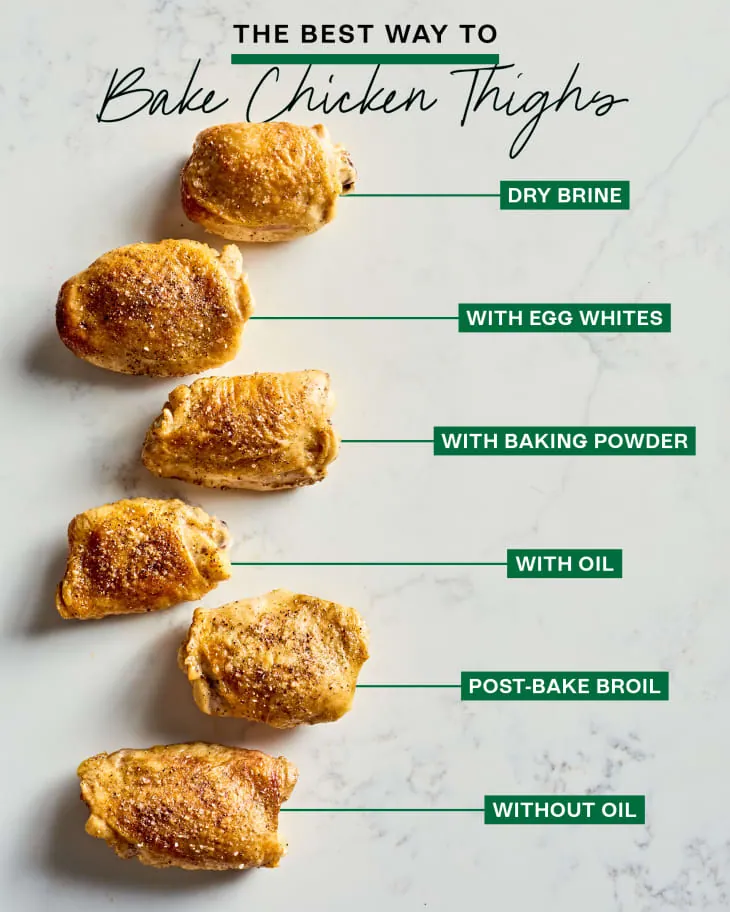
In my restaurant years, we roasted thighs at high heat because the skin needs it. At 350°F the skin stays pale and soft, and the meat takes longer to cook. At 400°F the fat under the skin melts and bastes the meat while it roasts.
The USDA says poultry must reach a safe internal temperature of 165°F, but thighs taste better around 175°F. The extra 10 degrees lets the connective tissue break down, so the meat turns tender instead of chewy. If you pull them at 165°F, they’re safe — just a bit firmer.
Times for Different Cuts and Ovens
| Thigh type | Temperature | Time |
|---|---|---|
| Bone-in, skin-on | 400°F | 35–45 min |
| Boneless, skinless | 400°F | 25–30 min |
| Bone-in, skin-on | 375°F | 45–50 min |
| Large thighs (8 oz+) | 400°F | 45–50 min |
| Small thighs (4 oz) | 400°F | 30–35 min |
Boneless thighs cook faster because there’s no bone slowing the heat. If you’re baking both kinds on one sheet, add the boneless pieces partway through, about 10 minutes after the bone-in ones go in.
Tip: Pat the skin completely dry before it goes in. Wet skin steams instead of crisping, and no amount of oven time fixes that.
Seasoning and Pan Setup
- Dry the thighs with paper towels — moisture is the enemy of crispy skin.
- Rub with oil — a light coat helps browning and keeps seasonings in place.
- Season generously — salt, pepper, paprika, garlic powder all work well.
- Arrange skin-side up on a sheet pan, leaving space between pieces.
- Roast at 400°F and check at the 30-minute mark with a thermometer.
- Rest 5 minutes before serving so the juices settle.
Crowding the pan is the mistake I see most. When thighs touch, they steam each other and the skin turns rubbery. Use two pans if you need to — it’s worth the extra wash.
When Thighs Come Out Dry or Rubbery
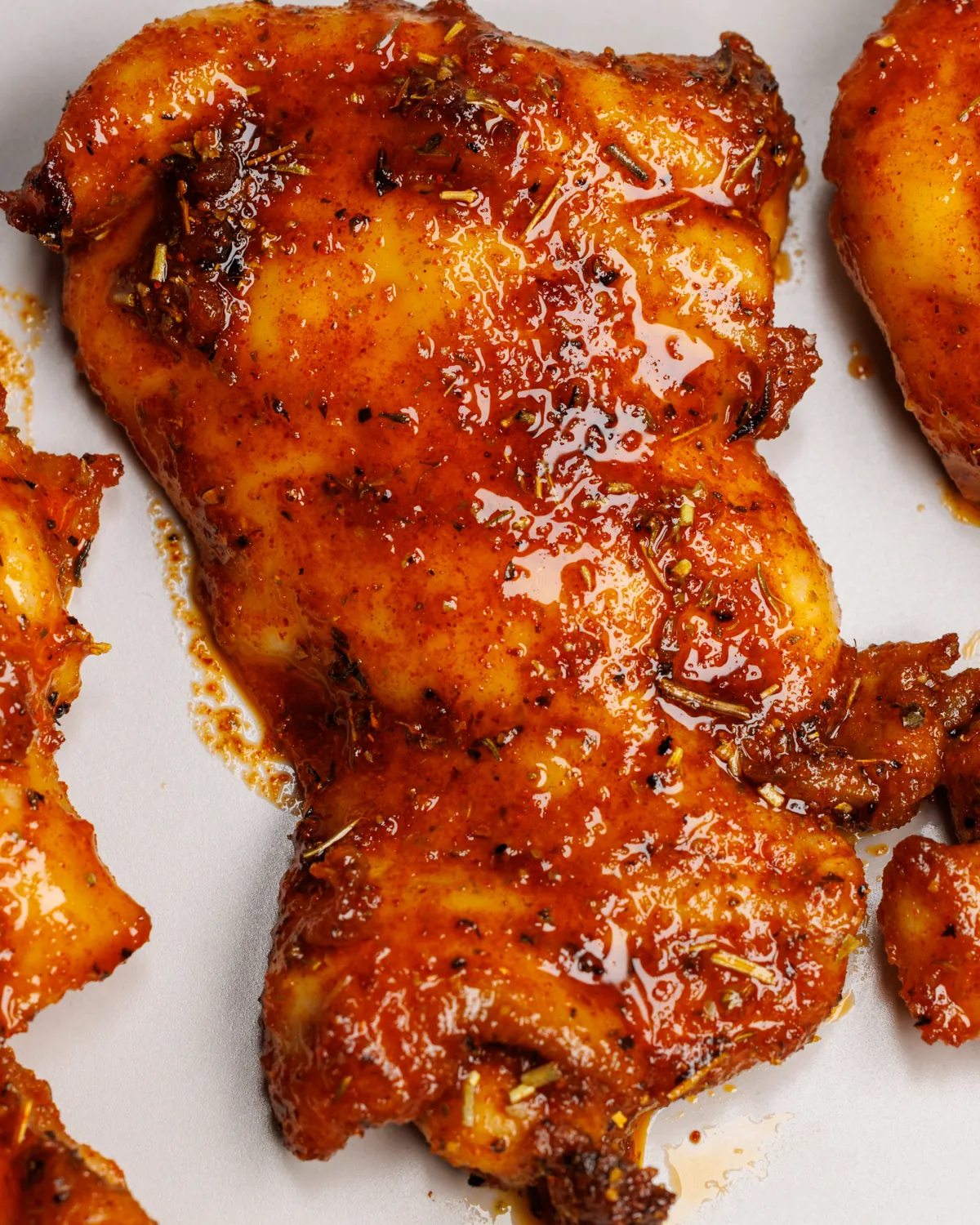
Dry thighs usually mean one thing: too long in the oven. Boneless pieces dry out fastest, so set a timer. Rubbery skin means low heat or wet skin — raise the temperature and dry the surface next time.
If the outside browns before the inside is done, tent the pan loosely with foil. This slows browning on top while the center catches up. Don’t wrap tightly, or you’ll trap steam and lose the crust.
Related guides
- Is Air Frying Chicken Faster? Times, Temps & Honest Results
- Can You Cook Raw Chicken in an Air Fryer?
- Can I Wrap Chicken in Foil in an Air Fryer?
Frequently Asked Questions
Can I bake thighs at 350°F instead?
Yes, but add 10 to 15 minutes and expect softer skin. Lower heat is fine for boneless thighs in sauce, where crispiness doesn’t matter.
Should I flip the thighs while baking?
No. Leave them skin-side up the whole time. Flipping makes the skin soggy on the pan side and doesn’t help the meat cook faster.
How do I know they’re done without a thermometer?
The juices should run clear when you pierce the thickest part, and the meat should pull away from the bone easily. A thermometer is still the safest check.
Buy bone-in, skin-on thighs when you can — they’re harder to ruin and give you better flavor. Next time, try sliding a few lemon slices and garlic cloves under the skin before roasting. The fat carries that flavor straight into the meat.
Why Do My Thighs Stick to the Pan?
They stick because the pan isn’t greased or lined well enough, or because the skin was left to bond to bare metal as it browned. Line the sheet pan with foil or parchment and the problem mostly disappears. If you’re using a bare metal pan, add a splash of oil under each piece. In my early kitchen days, I scraped more torn skin off sheet pans than I’d like to admit — parchment fixed it for good.
Can I Bake Thighs From Frozen?
Yes, but add about 20 minutes and start them covered with foil. Frozen thighs at 400°F usually need 55 to 65 minutes total, and the skin won’t crisp until the last 15 minutes uncovered. Thawed thighs always give you better texture, so pull them from the freezer the night before when you can.
Do Marinated Thighs Need a Different Temperature?
No — keep the oven at 400°F. But marinades with sugar or honey burn fast, so line the pan and watch the last 10 minutes. A yogurt or oil-based marinade is safer at high heat. Pat off excess marinade before roasting, or the wet coating steams the skin instead of browning it.
How Long Can I Keep Leftover Baked Thighs?
Store them in the fridge within 2 hours of cooking, in a covered container. They keep for 3 to 4 days. Reheat at 350°F for about 10 minutes, or until the meat reaches 165°F again. Cold thigh meat also works well sliced into salads and sandwiches, so leftovers rarely go to waste in my house.
What If the Skin Burns Before the Meat Is Cooked?
Move the pan to a lower rack, away from the top heating element. Loosely tent with foil and keep going. Next time, roast on the middle rack and check the skin at 25 minutes. Some ovens run hot — mine does, so I dropped my usual setting by 25°F and the burning stopped.
Start with bone-in, skin-on thighs and a thermometer — those two things solve most problems before they start. Then try the same method with a honey-paprika rub and see how your family likes it.
{“@context”:”https://schema.org”,”@type”:”FAQPage”,”mainEntity”:[{“@type”:”Question”,”name”:”Can I bake thighs at 350°F instead?”,”acceptedAnswer”:{“@type”:”Answer”,”text”:”Yes, but add 10 to 15 minutes and expect softer skin. Lower heat is fine for boneless thighs in sauce, where crispiness doesn’t matter.”}},{“@type”:”Question”,”name”:”Should I flip the thighs while baking?”,”acceptedAnswer”:{“@type”:”Answer”,”text”:”No. Leave them skin-side up the whole time. Flipping makes the skin soggy on the pan side and doesn’t help the meat cook faster.”}},{“@type”:”Question”,”name”:”How do I know they’re done without a thermometer?”,”acceptedAnswer”:{“@type”:”Answer”,”text”:”The juices should run clear when you pierce the thickest part, and the meat should pull away from the bone easily. A thermometer is still the safest check. Buy bone-in, skin-on thighs when you can — they’re harder to ruin and give you better flavor. Next time, try sliding a few lemon slices and garlic cloves under the skin before roasting. The fat carries that flavor straight into the meat.”}},{“@type”:”Question”,”name”:”Why Do My Thighs Stick to the Pan?”,”acceptedAnswer”:{“@type”:”Answer”,”text”:”They stick because the pan isn’t greased or lined well enough, or because the skin was left to bond to bare metal as it browned. Line the sheet pan with foil or parchment and the problem mostly disappears. If you’re using a bare metal pan, add a splash of oil under each piece. In my early kitchen days, I scraped more torn skin off sheet pans than I’d like to admit — parchment fixed it for good.”}},{“@type”:”Question”,”name”:”Can I Bake Thighs From Frozen?”,”acceptedAnswer”:{“@type”:”Answer”,”text”:”Yes, but add about 20 minutes and start them covered with foil. Frozen thighs at 400°F usually need 55 to 65 minutes total, and the skin won’t crisp until the last 15 minutes uncovered. Thawed thighs always give you better texture, so pull them from the freezer the night before when you can.”}},{“@type”:”Question”,”name”:”Do Marinated Thighs Need a Different Temperature?”,”acceptedAnswer”:{“@type”:”Answer”,”text”:”No — keep the oven at 400°F. But marinades with sugar or honey burn fast, so line the pan and watch the last 10 minutes. A yogurt or oil-based marinade is safer at high heat. Pat off excess marinade before roasting, or the wet coating steams the skin instead of browning it.”}},{“@type”:”Question”,”name”:”How Long Can I Keep Leftover Baked Thighs?”,”acceptedAnswer”:{“@type”:”Answer”,”text”:”Store them in the fridge within 2 hours of cooking, in a covered container. They keep for 3 to 4 days. Reheat at 350°F for about 10 minutes, or until the meat reaches 165°F again. Cold thigh meat also works well sliced into salads and sandwiches, so leftovers rarely go to waste in my house.”}},{“@type”:”Question”,”name”:”What If the Skin Burns Before the Meat Is Cooked?”,”acceptedAnswer”:{“@type”:”Answer”,”text”:”Move the pan to a lower rack, away from the top heating element. Loosely tent with foil and keep going. Next time, roast on the middle rack and check the skin at 25 minutes. Some ovens run hot — mine does, so I dropped my usual setting by 25°F and the burning stopped.”}}]}
I’m passionate about helping home cooks make everyday cooking easier, smarter, and more enjoyable. I share practical kitchen tips, cookware guides, cooking tutorials, and simple recipe inspiration based on real kitchen experience and modern home cooking needs.