
How to Convert Recipe Measurements From Cups to Grams
A cup of all-purpose flour is about 120 grams, but a cup of granulated sugar is about 200 grams. Converting recipe measurements from cups to grams has no single number that works for every ingredient, so the safe path is to weigh the ingredient you’re actually using.
That gap isn’t trivia. It’s the difference between a cookie that spreads and one that sits up like a biscuit, and it shows up most in baking, where flour, sugar, cocoa, and grated cheese all behave differently in the same cup.
If a recipe gives weights, use them and ignore the cup line entirely. If it gives only cups, weigh the first cup of each new ingredient once, write the number on the recipe, and you never have to guess again.
After 24 years in professional kitchens and now cooking at home, I still keep a small chart taped inside my cabinet door for exactly this reason.
The Steps I Use Every Time
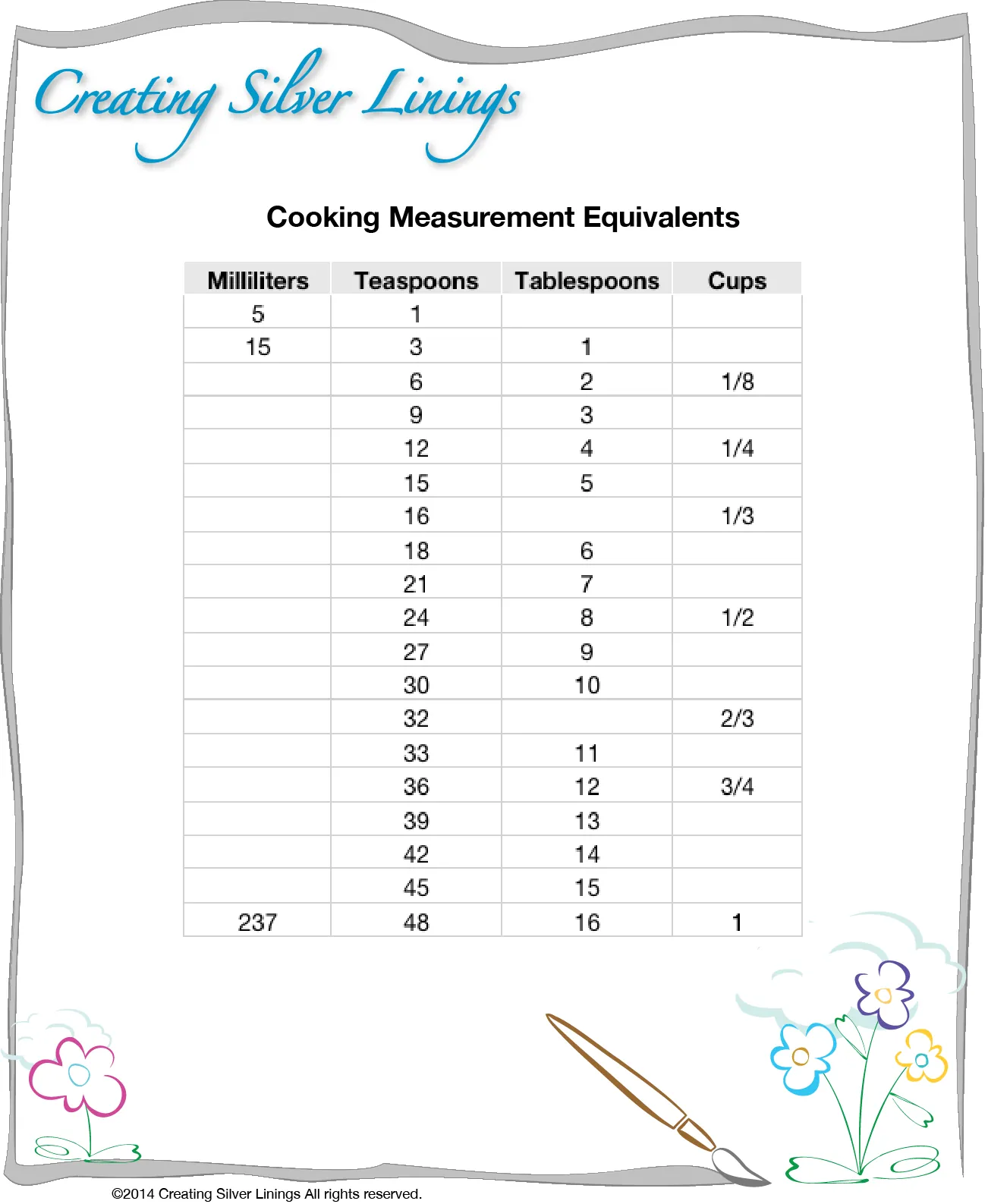
- Find the ingredient’s gram weight per cup. Use the table below or a trusted source. Different ingredients give very different numbers, so match the exact one you’re using.
- Check if your recipe means a dry cup or a liquid cup. They’re the same volume (240 ml), but they hold different weights of the same ingredient.
- Spoon the ingredient into the cup, then level it flat. Scooping straight from the bag packs it down and adds up to 20% more flour than the recipe expects.
- Weigh the filled cup on a kitchen scale set to grams. This is your real number. Write it down if you’ll use it again.
- Multiply by the number of cups the recipe calls for. Two cups of flour at 120 grams each equals 240 grams.
- Adjust by feel for the last bit. If the dough looks dry, add a spoonful of liquid; if it’s sticky, add a spoonful of flour.
Tip: If you bake often, weigh one cup of each ingredient you use most and write the numbers on a card. Your own kitchen’s numbers beat any chart.
Common Cup-to-Gram Weights
| Ingredient | 1 cup (grams) | ½ cup (grams) | ¼ cup (grams) |
|---|---|---|---|
| All-purpose flour | 120 | 60 | 30 |
| Granulated sugar | 200 | 100 | 50 |
| Brown sugar (packed) | 220 | 110 | 55 |
| Butter | 227 | 113 | 57 |
| Rolled oats | 90 | 45 | 22 |
| Cocoa powder | 85 | 43 | 21 |
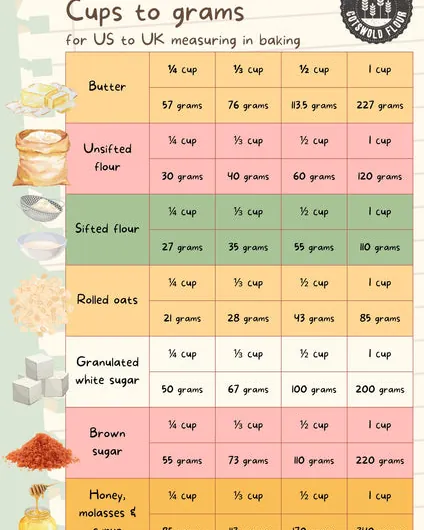
These are the numbers I’ve used for years, and they match what most US baking sources publish. The USDA FoodData Central database lets you look up weights for almost any ingredient if yours isn’t here.
Flour is the one that bites people. Scoop it straight from the bag and you can pack 150 grams into a cup instead of 120 — a 25 percent overage that turns a tender cake into a dry, dense one. Spoon it into the cup and level it off, or weigh it, and you get the number in the table.
Brown sugar is the opposite case. It’s measured packed, pressed hard into the cup until it holds the shape of the cup when you turn it out. Loose brown sugar in a cup weighs closer to 150 grams, so a recipe that reads “1 cup brown sugar” means the packed figure.
Butter is the easy one: one US stick is ½ cup, or 113 grams, so a cup is two sticks. If your butter is sold in a block, the wrapper’s gram markings do the work for you.
Mistakes That Throw Off Your Numbers
Why does my flour weigh more than the chart says?
You’re probably scooping directly from the bag. That compresses the flour and can push one cup past 140 grams. Spoon it in loose, then level with a knife. This one habit fixes most baking failures.
Can I use the same gram number for every liquid?
No. Water is 240 grams per cup, but honey is about 340 grams and oil is about 218 grams. Weigh liquids in the cup you’ll pour from, and zero the scale first.
What if my scale only reads ounces?
Multiply ounces by 28.35 to get grams. A cup of flour at 4.2 ounces becomes about 120 grams. It’s close enough for most home cooking, though a gram scale is more accurate.
Related guides
Frequently Asked Questions
Do I really need a scale, or can I just use cups?
Cups work fine for soups and sauces. For baking, a scale gives you the same result every time. Flour settles and packs differently depending on humidity and how you scoop, so cups vary more than most people expect.
Is a US cup the same as a metric cup?
No. A US cup is 240 ml, an Australian cup is 250 ml, and a Japanese cup is 200 ml. If your recipe comes from another country, check which cup it uses before you start weighing.
What about sifting flour before measuring?
Sifted flour is lighter, so one cup can drop to around 100 grams. If your recipe says “1 cup sifted flour,” sift first, then measure.

I’m passionate about helping home cooks make everyday cooking easier, smarter, and more enjoyable. I share practical kitchen tips, cookware guides, cooking tutorials, and simple recipe inspiration based on real kitchen experience and modern home cooking needs.