
How to Fix a Sauce That Is Too Thin or Too Thick
A thin sauce usually needs a starch or a fat to hold it together, and a thick one needs liquid, heat, or both. In my 24 years in professional kitchens, almost every sauce problem came down to one of four causes: too much liquid, not enough starch, too much reduction, or a sauce that broke. Fix the cause, not just the surface.
Why Your Sauce Is Thin or Thick: The Usual Causes

Most thin sauces are simply under-thickened or over-reduced. If yours tastes watery, the starch-to-liquid ratio is off. If it tastes strong and syrupy, you’ve cooked away too much water. A sauce that suddenly turns grainy or greasy has broken — the fat and liquid separated.
Sometimes the problem isn’t the sauce at all. A sauce sitting in a hot pan keeps reducing while you’re not looking. One I’ve watched a hundred times: someone adds cornstarch straight into hot liquid, it clumps, and they add more liquid to fix it — making everything thinner.
What to Do About It
Use this to match what you see to what’s actually wrong.
| What you see | Most likely cause | What to do |
|---|---|---|
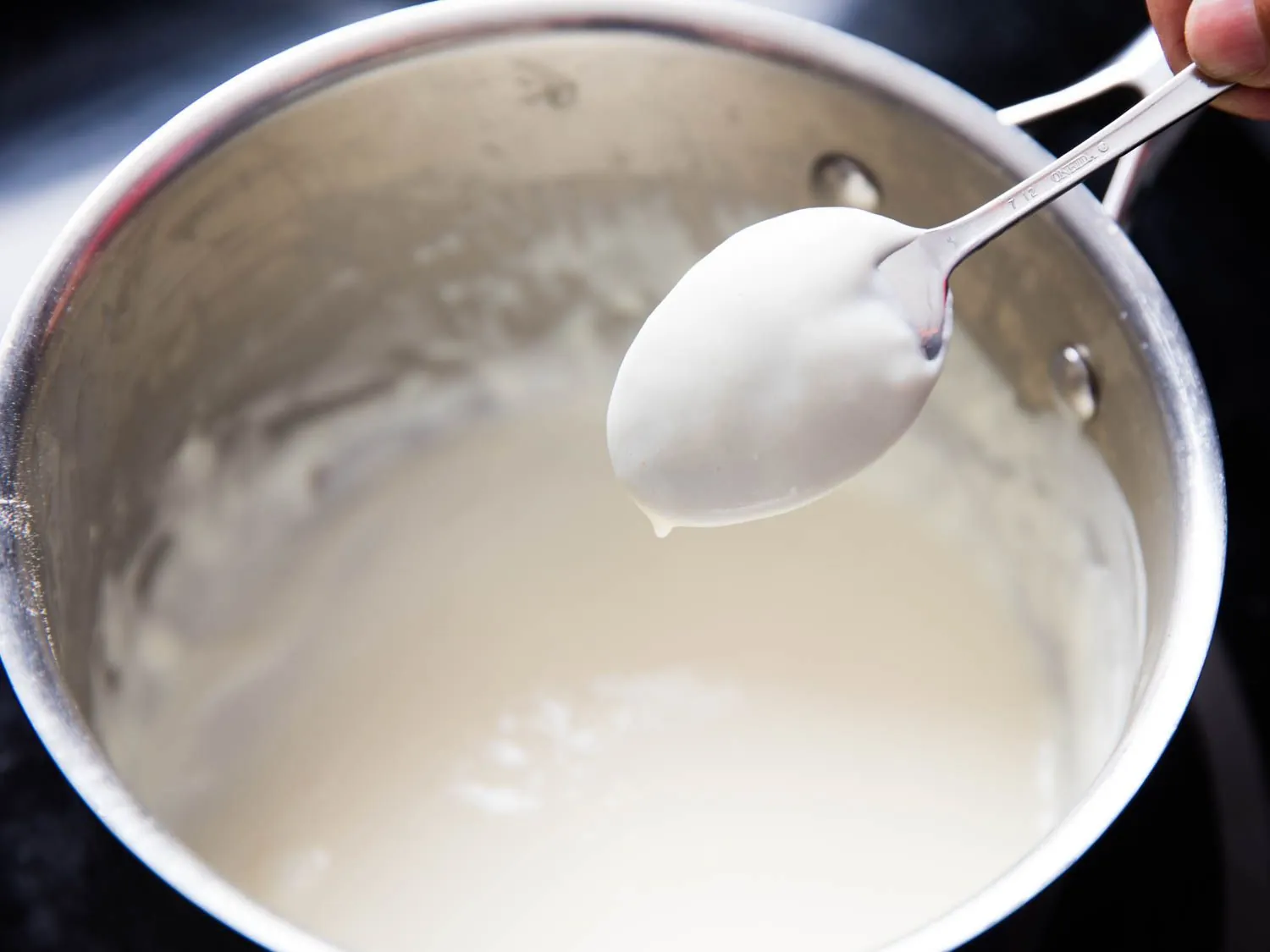
| Watery, runs off the spoon | Not enough starch or reduction | Add a slurry or reduce further |
| Very thick, paste-like | Too much reduction or starch | Whisk in warm liquid, a little at a time |
| Grainy or greasy, shiny film | Sauce broke (fat separated) | Take off heat, whisk in warm liquid or a little cold butter |
| Lumps floating | Starch added dry to hot liquid | Strain, then re-thicken with a smooth slurry |
| Thickens then thins again | Starch wasn’t cooked through | Simmer 2-3 minutes to activate it |
How to Thicken a Thin Sauce
A cornstarch slurry — equal parts cornstarch and cold water — is my go-to for quick fixes. Whisk it smooth first, then add it to a simmering sauce, not a boiling one. Give it 1-2 minutes to work before you judge it. For every cup of liquid, start with 1 tablespoon of slurry and add more only if you need it.
A flour-and-butter roux works better for dairy sauces like béchamel, but it needs cooking for at least 2 minutes to lose the raw flour taste. For pan sauces, a knob of cold butter whisked in at the end adds body and shine without any starch at all.
Tip: Take the pan off the heat before you add a slurry or cold butter. High heat is what makes starch clump and butter split.
How to Thin a Sauce That’s Too Thick
Add warm liquid, not cold — cold liquid shocks a hot sauce and can make it break. Stock, water, milk, or even a splash of the sauce’s own base works. Add 1 tablespoon at a time and whisk constantly, because a sauce thickens as it sits.
How much you add depends on why it thickened. If it reduced on the stove, you’re replacing water that cooked off, so keep going until it coats a spoon the way you want. If it thickened with flour or cornstarch, a little liquid goes a long way, and each tablespoon buys you less than the last.
Watch for the point where it stops thinning. That means the sauce has reached the consistency you want, and adding more liquid will only dilute it. Stop there and thin with a splash of hot stock or wine instead.
If your sauce tastes too concentrated after thinning, that’s a sign you reduced it too far. A pinch of sugar balances excess salt, and a squeeze of lemon brings back brightness. Taste after each addition, not before.
When It’s Not Worth Fixing
If a sauce has broken badly and tastes greasy no matter how much you whisk, start over. So does any sauce left out more than 2 hours at room temperature. Reheating a sauce that’s been at room temperature too long isn’t safe — the USDA FoodSafety.gov guidance on the 2-hour rule applies to any cooked food, sauces included. A sauce with dairy or meat stock follows the same rule.
A sauce that has split but still tastes good is a different case. Take it off the heat and whisk in a spoonful of cold water or stock. If that fails, strain it and start a fresh base with the strained liquid. You lose texture, not flavor.
The clock matters more than the look. A sauce that smells fine but sat out 3 hours is still a throwaway. When in doubt, bin it. One ruined dinner beats a night of food poisoning.
Frequently Asked Questions
Can I fix a sauce with cornstarch after it’s already been served?
Yes, if it’s still hot. Reheat gently and whisk in a fresh slurry, but only once — reheating a starch-thickened sauce twice makes it gluey.
Why did my sauce get thicker after I turned off the heat?
Starch keeps absorbing liquid as it cools. If it looks right in the pan, it’ll be too thick on the plate, so aim for slightly thinner than you want.
Can I use flour instead of cornstarch to thicken?
Yes, but use twice as much and cook it for at least 2 minutes, or the sauce tastes raw. Cornstarch is clearer and faster, flour is better for dairy sauces.
Conclusion
Next time a sauce goes wrong, taste it first and ask which of the four causes it’s before you touch the pan. Keep a small bowl of cold water and cornstarch mixed on the counter while you cook — it saves more sauces than any other trick I know.

I’m passionate about helping home cooks make everyday cooking easier, smarter, and more enjoyable. I share practical kitchen tips, cookware guides, cooking tutorials, and simple recipe inspiration based on real kitchen experience and modern home cooking needs.