
What Knives Do You Actually Need in a Home Kitchen? Three
Three knives cover almost everything you’ll cook at home: a chef’s knife, a paring knife, and a serrated bread knife. After 24 years in professional kitchens and now cooking at home, I’d spend your whole budget on the first one and buy the other two cheap.
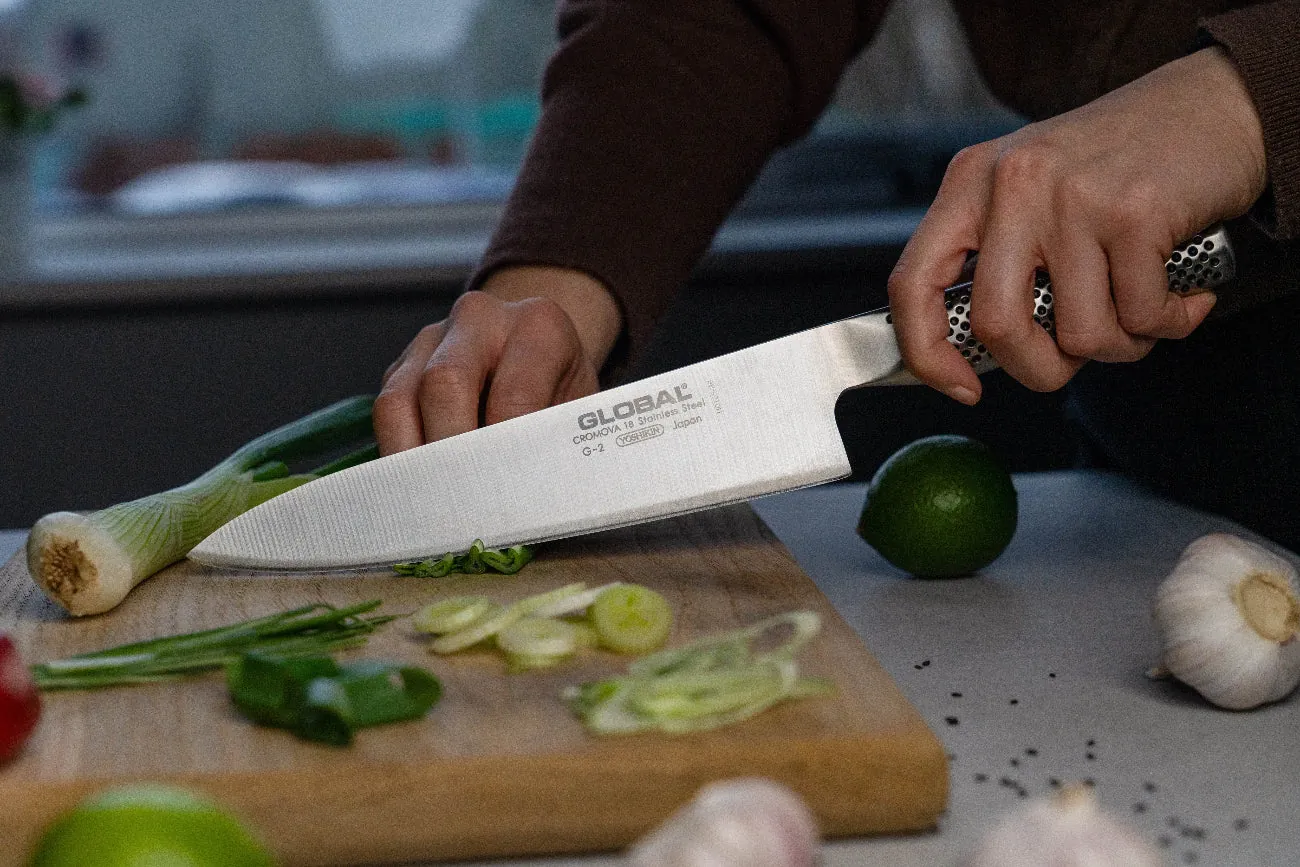
A chef’s knife does 90% of the work — onions, meat, herbs, squash. An 8-inch blade suits most adults; go to 10 inches only if your hands are large or you cook for a crowd. Below 8 inches, you lose the rocking motion that makes chopping fast. Buy one that feels balanced in your hand, not the heaviest one on the rack.
The paring knife handles small jobs your hands can’t reach with a big blade: hulling strawberries, trimming fat, peeling garlic. A 3- to 4-inch blade is the range to stay in.
The serrated knife cuts bread, tomatoes, and anything with a tough skin and soft inside. A long one — 9 or 10 inches — gets through a whole loaf in one stroke.
The Three Knives That Earn Their Space
| Knife | Blade length | What it’s for | What to spend |
|---|---|---|---|
| Chef’s knife | 8 inches | Almost everything: chopping, slicing, mincing | Most of your budget |
| Paring knife | 3–4 inches | Peeling, trimming, small precision cuts | Little — it’s a simple blade |
| Serrated bread knife | 8–10 inches | Bread, tomatoes, citrus, cake layers | Little — teeth matter more than steel |
Skip the block sets. A 12-piece set gives you six knives you’ll never touch and one decent blade buried in the middle.
Tip: Hold a chef’s knife before buying. If the handle doesn’t sit comfortably in your hand, the sharpest blade in the shop won’t help you.
Does an Expensive Knife Stay Sharp Longer?
Yes, but not enough to justify the price gap for someone who cooks a few times a week. A hard steel blade holds its edge longer between sharpenings, but it also chips if you twist it or cut on glass. Softer steel dulls faster and sharpens back in two minutes on a rod.
If you cook daily and hate sharpening, pay more for the chef’s knife. If you cook a few times a week, a mid-priced blade plus a sharpener keeps you cutting well for years.
Here’s the trade-off I made at home: I gave up the razor edge of my old work knives for steel I can bring back myself on a Sunday morning.
How to Keep Them Cutting
-
Cut on wood or plastic. Glass and stone boards kill an edge in one session. End-grain wood is kindest, but any wood or soft plastic beats a hard surface. If you cook on glass because it wipes clean, keep one wood board for the knife and use the glass for serving.
-
Wash by hand and dry right away. Dishwashers bang blades against racks and heat warps handles. A carbon steel blade left wet will spot before the meal is over. Wash, dry, put it away — the whole thing takes under a minute.
-
Hone before each use. A few strokes on a rod realigns the edge — this isn’t sharpening. Hold the rod upright on the counter and draw the blade down at about 20 degrees per side. If you can’t hold an angle, a rod with guide slots removes the guesswork.
-
Sharpen two or three times a year. A pull-through or stone works fine at home; a service does it if you’d rather not. Hone weekly and you may only need to sharpen once or twice.
-
Store on a magnetic strip or in a sheath. A loose drawer dulls blades against everything else in it. If you use a block, slide blades in edge-up so they don’t rest on the cutting edge.
When a Knife Isn’t the Problem

Sometimes the knife is fine and something else is slowing you down. A dull edge makes you push, and pushing is how people slip and cut themselves — the U.S. Consumer Product Safety Commission lists cuts as one of the most common kitchen injuries, and a sharp blade is the safer one because it goes where you aim it.
Other things that cost you: a board that slides, a cramped space, or a blade that’s too long for your counter. Fix those before you buy another knife.
A wet towel under the board costs nothing and stops the slide. If your board still walks, the counter is the problem, not the board.
Watch your cutting hand for a minute. If the fingertips curl under and the knuckles lead, your grip is already safe and the knife is what needs work. If the fingers lie flat, no edge will save you.
Short on counter space? A 6-inch blade does nearly everything an 8-inch does, and it needs less room to come down. Long blades are for long cuts, not small kitchens.
Related guides
- How to Choose an Air Fryer for Home?
- Which Air Fryer Is Best for Home Use?
- Best Value Air Fryers: Top Picks for Your Kitchen
Frequently Asked Questions
Can I use just one knife for everything?
Yes. A chef’s knife handles bread and tomatoes too, just less cleanly. If you only buy one knife, make it an 8-inch chef’s knife and keep it sharp.
How often should I replace a kitchen knife?
Rarely. A good knife lasts decades with sharpening and honing. Replace it only when the blade is chipped past repair or the handle is cracked and loose.
Are expensive knives worth it for a home cook?
Only the chef’s knife. Spend there, then buy a cheap paring knife and bread knife. You’ll notice the difference on the knife you use every day.
Conclusion
Start with one 8-inch chef’s knife you’ve held in your hand, then add the paring and serrated blades when a job actually calls for them. Learn to hone it before each use, and you’ll get more from that single knife than from any set you could buy.

I’m passionate about helping home cooks make everyday cooking easier, smarter, and more enjoyable. I share practical kitchen tips, cookware guides, cooking tutorials, and simple recipe inspiration based on real kitchen experience and modern home cooking needs.