
How to Wash and Store Fresh Produce to Prevent Spoilage
Wash produce under cool running water, rub the skin with your hands, and dry it well before storing — that’s the core of how to wash and store fresh produce to prevent spoilage. Most fruit and vegetables last 3 to 10 days when you separate the ones that release ripening gas, keep them dry, and store each type at the right temperature.
How to Wash and Store Produce Step by Step
-
Wash your hands first. Unwashed hands spread bacteria to everything you touch. Soap and warm water for 20 seconds.
-
Rinse under cool running water. Rub the surface with your hands. Running water carries germs away — soaking just moves them around. The FDA recommends this for all produce, including produce with a firm skin.
-
Scrub firm items with a brush. Melons, potatoes, cucumbers and carrots need a clean vegetable brush. Rinse the brush after each use.
-
Dry everything with a clean towel. Extra water is what turns leaves slimy. A salad spinner works well for greens.
-
Sort out damaged pieces. One soft spot can spread mold to nearby pieces. Eat bruised fruit first or cut the bad part away.
-
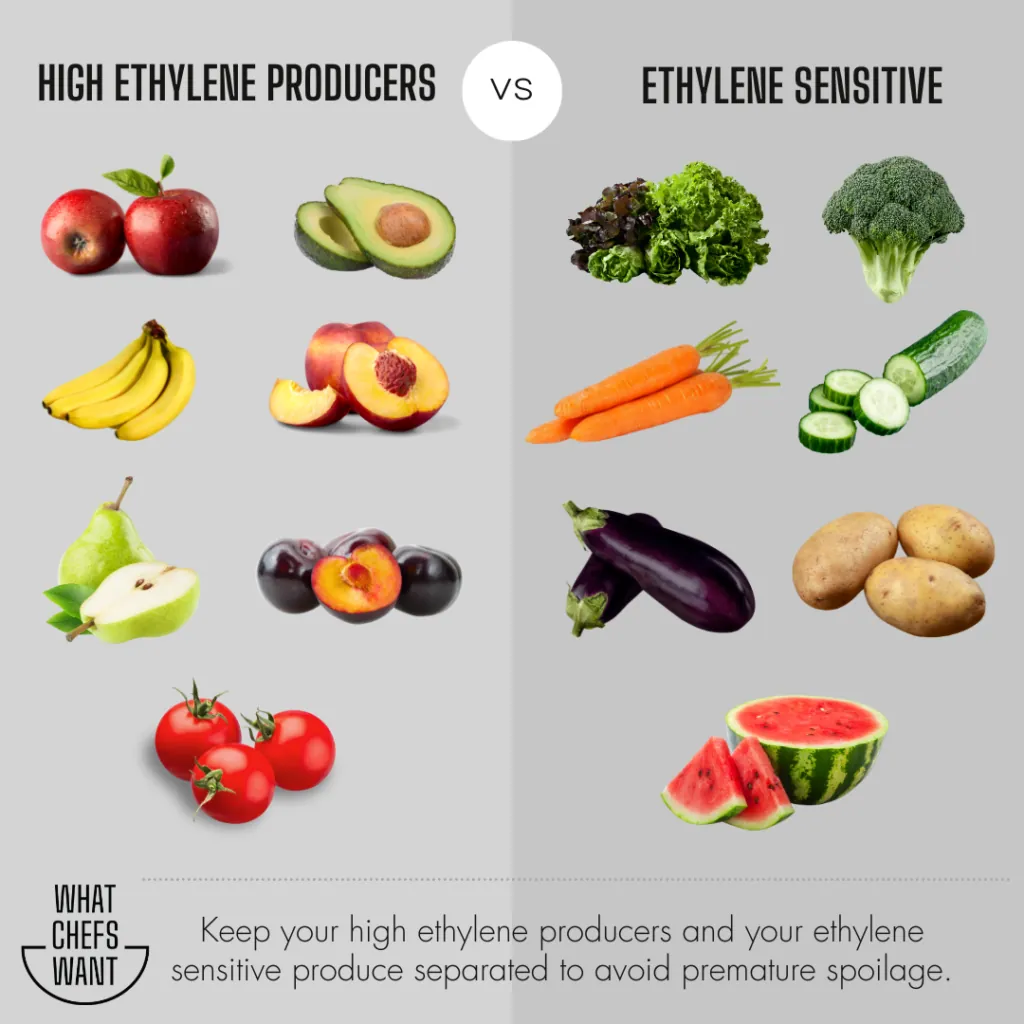
Keep gas-releasing fruit apart. Apples, bananas, avocados and tomatoes make other produce ripen faster. Store them in their own spot.
-
Match each item to its place. Some need the fridge, some need the counter, and some hate the cold.
Tip: Don’t wash berries, mushrooms or fresh herbs until you’re ready to eat them. Water on the surface encourages mold.
How Long Does Fresh Produce Last?
These are honest ranges. A ripe avocado from the market won’t match a firm one from a farm stand, and your fridge temperature shifts the numbers.
| Produce | Where to store | Typical fridge life |
|---|---|---|
| Leafy greens (dry, in a towel) | Fridge drawer | 3–5 days |
| Berries (unwashed) | Fridge | 3–7 days |
| Apples | Fridge | 4–6 weeks |
| Potatoes, onions, garlic | Cool dark cupboard | 2–4 weeks |
| Tomatoes (ripe) | Counter, then fridge | 2–3 days on counter |
| Herbs (stems in water) | Fridge, loosely covered | 5–7 days |
| Carrots, beets | Fridge, in a bag | 2–4 weeks |
Two things shorten every number in that table: water and ethylene. Wet greens rot in half the time, so dry them before they go in. Apples, bananas, and ripe tomatoes give off ethylene, which speeds up whatever sits beside them. Keep those three away from your greens and berries.
The dates are a starting point, not a verdict. Soft berries with no fuzz or smell are fine to eat; slimy greens are not, no matter what the calendar says.
Is It Safe to Wash Produce With Vinegar or Soap?
No. Soap and dish detergent aren’t made for food, and residue can stay on the skin even after rinsing. Soap residue can remain on the skin even after rinsing and isn’t meant to be eaten.
Vinegar rinses are a home habit, not a safety step. Plain running water does the job. A vinegar soak isn’t a reliable way to remove bacteria or pesticide residues.
If you want extra protection for firm items, use a produce brush and water only. Scrubbing apples or cucumbers under running water physically dislodges dirt that soaking alone leaves behind.
For anything you’ll peel, wash it anyway: your knife drags surface germs through the flesh when you cut. Rinsing melons before slicing prevents pathogens from transferring inside.
Mistakes That Shorten Storage Time
Why did my salad go slimy in two days?
Wet leaves. Dry them fully, then store them in a container lined with a paper towel. Change the towel when it feels damp.
If your greens came in a sealed plastic clamshell, that lid is the problem. Punch a few holes in it, or move the leaves to a bowl you cover loosely. Sealed plastic traps the moisture the leaves give off, and that’s what turns them to slime.
Why are my potatoes sprouting so fast?
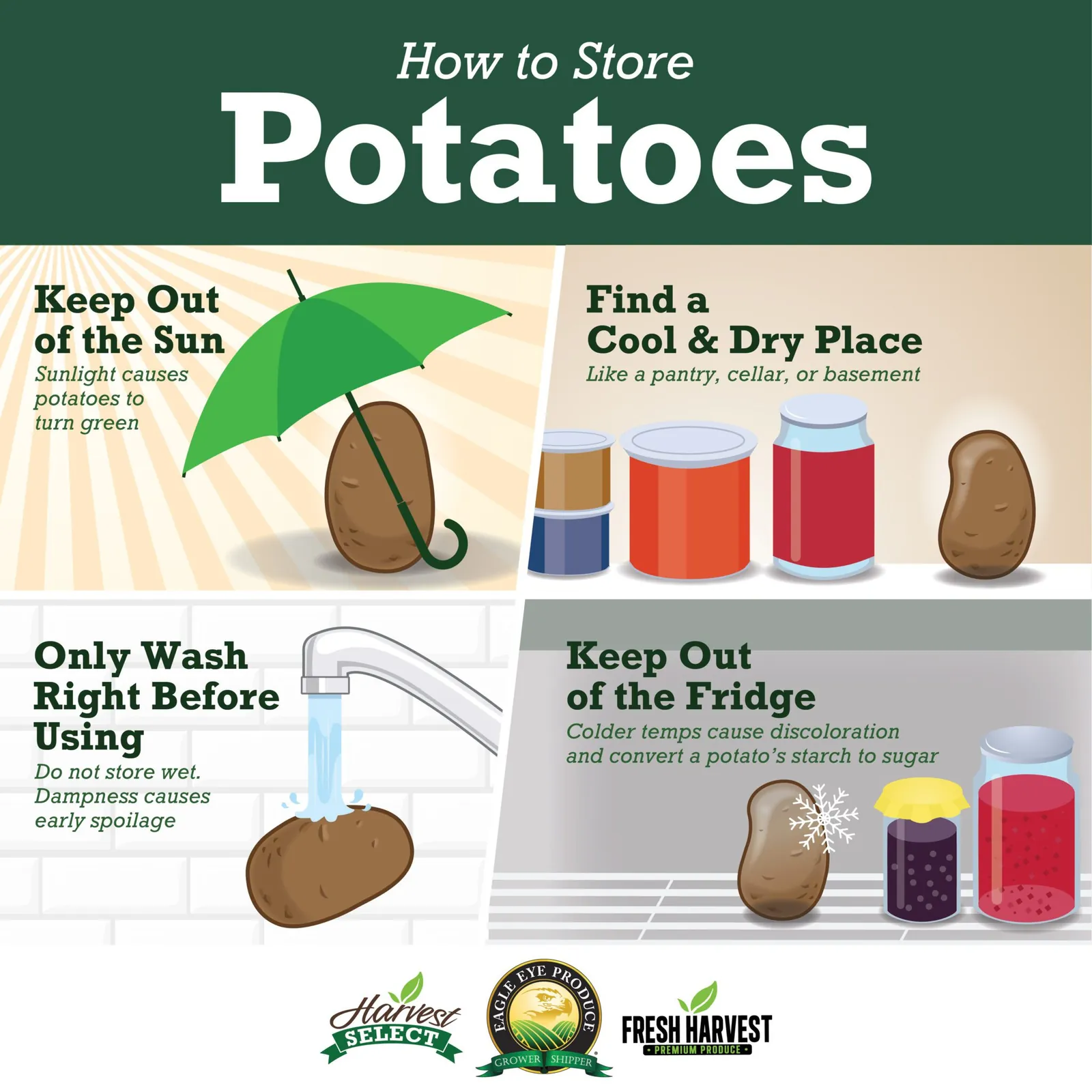
Light and warmth. Keep them in a dark, cool cupboard, away from onions — the two make each other spoil faster.
A bag left near the stove or the fridge’s exhaust will sprout in days. If you have no cool cupboard, buy fewer at a time. Potatoes that have sprouted or turned green should be discarded, not eaten.
Why does one bad berry ruin the box?
Mold spreads by contact. Pick out soft or fuzzy berries the moment you see them, or the rest will follow within a day.
Rinse berries only right before you eat them. Water left on the skins speeds the same mold you’re trying to avoid.
Related guides
Frequently Asked Questions
Can I wash produce ahead of time for the week?
Only firm items like carrots and peppers. Wash, dry completely, and refrigerate in a sealed container. Soft items — berries, herbs, mushrooms — should stay unwashed until you use them, because surface moisture speeds up mold.
Should I refrigerate tomatoes and bananas?
Not until they’re fully ripe. Cold can damage their texture and slows the ripening process. Once a tomato or banana is soft and ready, move it to the fridge to buy a few extra days.
Does cutting produce make it spoil faster?
Yes. A cut surface loses moisture and lets in air and bacteria. Cut only what you’ll eat that day, and refrigerate any leftovers in a sealed container.
Conclusion
Start with one change this week: wash and dry only what you’ll eat in the next few days, and keep gas-releasing fruit away from everything else. That single habit will cut more waste than any container you buy.

I’m passionate about helping home cooks make everyday cooking easier, smarter, and more enjoyable. I share practical kitchen tips, cookware guides, cooking tutorials, and simple recipe inspiration based on real kitchen experience and modern home cooking needs.