
Baking Soda vs Baking Powder: What’s the Difference?
Baking soda is pure sodium bicarbonate and needs an acid plus moisture to bubble. Baking powder already contains that acid, so it works with plain water or milk. That’s the whole difference, and it decides how your batter rises, how much you use, and what your cookies or pancakes look like when they come out.
How baking soda and baking powder differ
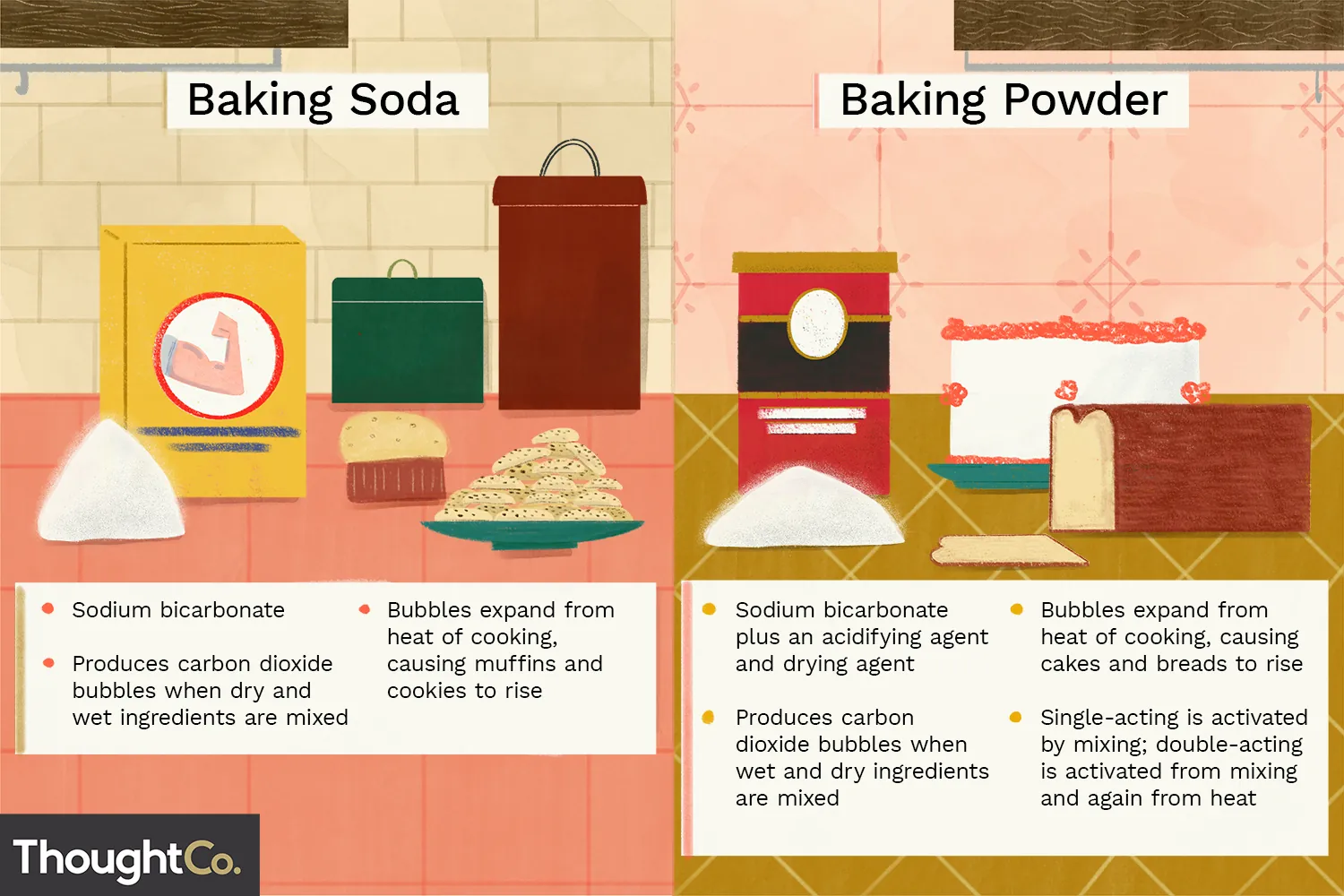
In my 24 years cooking professionally, this is the swap that ruins more home baking than anything else. Baking soda is about four times stronger than baking powder, so you can’t trade them spoon for spoon. Soda starts bubbling the second it touches buttermilk, yogurt, lemon or vinegar. Powder waits until it gets wet and warm, then does its own work.
That’s why pancakes made with soda and buttermilk taste tangy and brown fast, while cookies made with powder rise gently and stay pale. The choice changes flavor, not just height.
| Your recipe has | Use this | Result |
|---|---|---|
| Buttermilk, yogurt, lemon, vinegar | Baking soda | Tangy taste, quick browning |
| Milk or water only | Baking powder | Mild taste, even rise |
| Both, in bigger cakes | Both together | Best lift and flavor |
Tip: If your batter smells sharp or metallic, you added too much soda. Cut it by half next time.
Can You Substitute One for the Other?
Yes, but only with the right ratio, and the taste will shift. To replace 1 teaspoon of baking powder, use 1/4 teaspoon of baking soda plus 1/2 teaspoon of vinegar or lemon juice. Add the acid to the wet ingredients, not the dry.
That swap works because baking powder is baking soda with the acid already built in. You’re supplying the missing half yourself.
Going the other way is harder. You can’t replace baking soda with baking powder without adding three or four times the amount, and that extra powder brings its own salt and acid, which flattens the flavor. If a recipe leans on soda for chew or color — like chocolate chip cookies — a straight swap gives you a puffy, cakey cookie instead.
Buttermilk, yogurt, sour cream, molasses, brown sugar, cocoa and citrus all count as the acid. If your recipe already has one of them, the soda has something to react with. If it has none, the soda mostly sits there, and you taste it.
If you want the exact chemistry, the FDA’s baking soda guidance explains what the ingredient actually is.
How to Tell If Yours Still Works
Old powder and soda are the quiet reason a cake sinks. Test before you bake, not after.
- Baking soda: put 1/4 teaspoon in a small bowl, add a splash of vinegar. It should fizz hard and fast. Flat means toss it.
- Baking powder: put 1/2 teaspoon in a bowl, add hot water. You want steady bubbles within a few seconds. Weak bubbles mean weak lift.
Soda keeps well for years in a sealed jar. Powder loses its punch faster, often within a year of opening, because the acid inside slowly stops reacting. Write the opening date on the tin with a marker — that’s the one habit that saves you.
If you bake once a month, buy powder in the small tin and replace it yearly. If you bake twice a year, buy the small tin anyway; the big one goes flat before you finish it.
A tin that clumps, or powder that smells sharp and chemical, is done. So is soda kept in an open box in the fridge past its absorbing job.
When a recipe calls for both, they do different work: soda needs an acid to react, powder carries its own. Testing each separately tells you which one failed. If soda fizzes and powder does not, your recipe still needs the powder replaced.
Mistakes That Ruin the Rise

Why did my cake taste bitter or soapy?
Too much baking soda. It can’t all react, so what’s left tastes bitter and turns the crumb yellow. Stick to the recipe amount, and don’t add extra “for luck.”
Why didn’t my cookies spread?
You used soda where the recipe wanted powder, or your powder is dead. Soda needs acid to work; without it, the dough just sits there. Check your powder with the hot-water test.
Can I just use more of one to fix it?
No. Adding more soda won’t replace missing powder — it only adds bitterness. Adding more powder brings salt and acid that throw off the whole recipe. Fix the ingredient, not the amount.
The catch here is your own kitchen: an oven that runs hot, a humid climate, or a tin that’s been open for two years will change your results in ways no chart can predict. Your recipe’s own notes are the place that settles it.
Related guides
- Is Air Frying Faster Than Baking? Here’s the Real Difference
- Can You Use Baking Paper in an Air Fryer?
- Is Air Frying Healthier Than Baking? A Chef’s Honest Answer
Frequently Asked Questions
Are baking soda and baking powder the same thing?
No. Baking soda is pure sodium bicarbonate. Baking powder is sodium bicarbonate mixed with a dry acid and usually cornstarch, so it works on its own once it gets wet and warm.
Can I use baking soda instead of baking powder in pancakes?
Only with added acid. Use 1/4 teaspoon of soda plus 1/2 teaspoon of lemon juice or vinegar for every teaspoon of powder. Without the acid, your pancakes won’t rise.
Does baking powder go bad?
Yes, and faster than soda. Most powder loses strength within a year of opening. Test it with hot water before you trust it in a special bake.
Conclusion
Next time you bake, check the date on your tins and run the fizz test before you start mixing. That one minute tells you whether your cake will rise or fall, and it’s the habit that separates a good bake from a disappointing one.

I’m passionate about helping home cooks make everyday cooking easier, smarter, and more enjoyable. I share practical kitchen tips, cookware guides, cooking tutorials, and simple recipe inspiration based on real kitchen experience and modern home cooking needs.