
How to Use a Meat Thermometer Correctly for Perfect Meat
To use a meat thermometer correctly, insert the probe into the thickest part, away from bone and fat, and wait 15 seconds for the reading to stop moving. For chicken breast, that means 165°F. For a beef roast you want medium, pull it at 130°F and let it rest.
I spent 24 years in professional kitchens before I started cooking at home, and the thermometer was the one tool I never guessed with. Here’s how to use it so your meat comes out right every time.
How to Use a Meat Thermometer, Step by Step
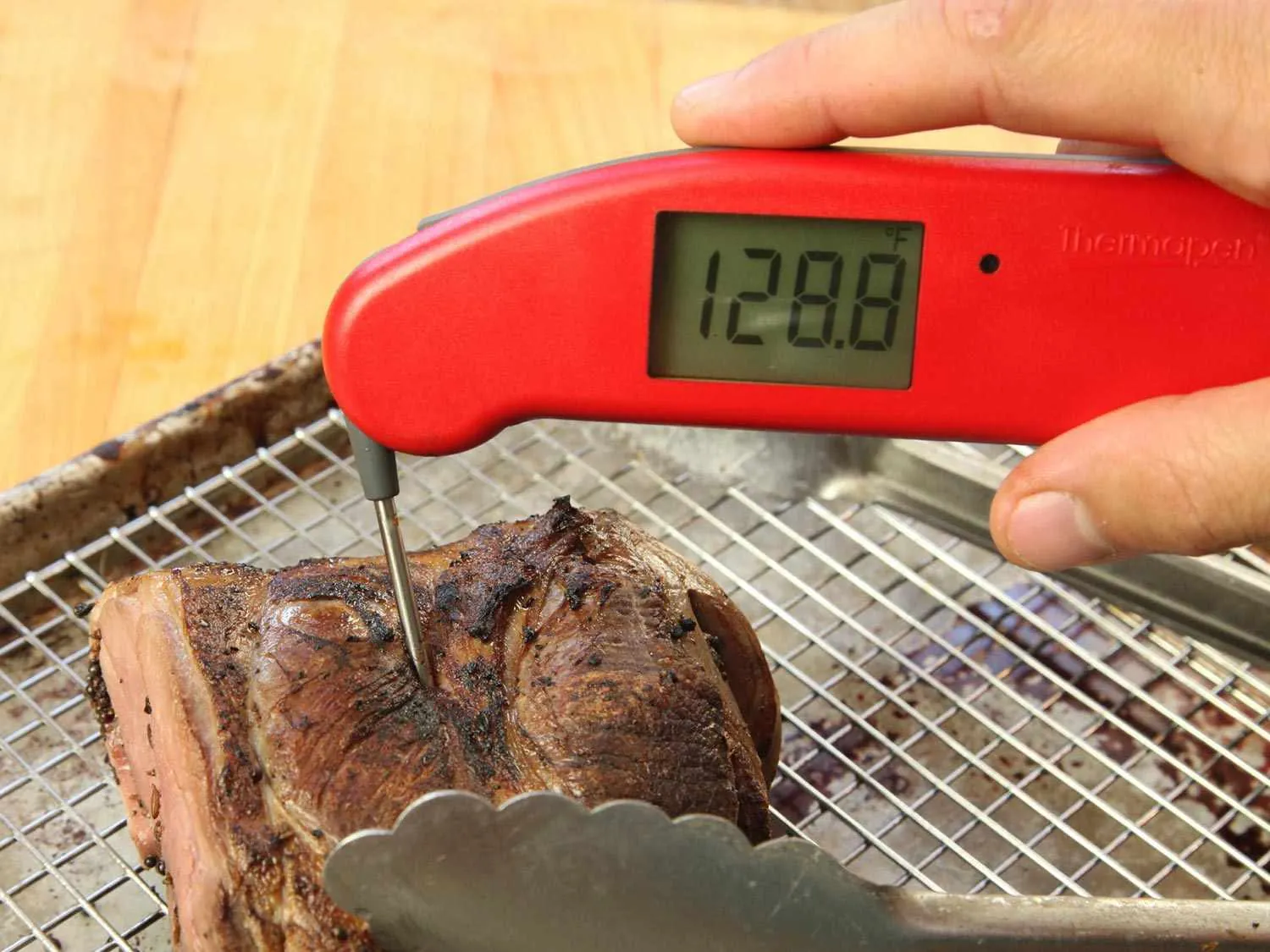
- Check the thermometer first. Put the probe in a glass of ice water. It should read 32°F. If it’s off by more than a few degrees, replace it.
- Find the thickest part. This is the slowest spot to heat, so it tells you the truth about the whole piece. For poultry, aim for the inner thigh or the thickest part of the breast.
- Stay away from bone and fat. Bone conducts heat differently from muscle and fat insulates, so both can give you a misleading reading. Slide the probe about an inch from any bone.
- Push in to the center. Go in at an angle so the tip sits in the middle of the meat, not near the surface.
- Wait for the number to settle. Digital thermometers need about 15 seconds. The reading will climb, then stop. That final number is your answer.
- Check a second spot. On a whole bird or a big roast, test two or three places. The lowest reading wins.
- Clean it right away. Wash the probe with hot soapy water before it touches anything else.
The Temperatures You’re Cooking To
The USDA safe minimum internal temperature chart is the standard I follow, and it’s the one to trust over any habit. Here are the numbers that matter most.
| Meat | Pull it at | Rest time |
|---|---|---|
| Chicken and turkey (all parts) | 165°F | None needed |
| Ground beef, pork, lamb | 160°F | None needed |
| Beef, pork, lamb steaks and roasts | 145°F | 3 minutes |
| Fish | 145°F | None needed |
| Leftovers and casseroles | 165°F | None needed |
For medium-rare beef, pull at 130°F and rest. The temperature keeps rising as it sits, usually 5 to 10 degrees.
Tip: If you’re cooking a thin cut like a pork chop or a steak, insert the probe from the side, parallel to the counter. There’s not enough depth to go in from the top.
Mistakes That Give You a Wrong Reading
Why does my thermometer read a temperature that seems too low?
You’re probably in fat or near the surface. Fat insulates, so the tip reads cooler than the meat around it. Pull the probe out, wipe it, and push into a leaner, deeper spot.
Bone conducts heat differently from muscle, and a probe resting against it will sit below the true internal temperature. Slide the tip an inch or two away from any bone before you trust the number.
Why is my reading jumping around?
A loose probe or a dying battery. Press the probe in firmly and hold it still. If it still jumps, change the battery — a weak one causes the display to flicker.
Cheap thermometers drift as they age, and a jumpy display is often the first sign. Check yours in ice water: it should read 32°F. If it’s off by more than a couple of degrees, replace it rather than adjusting your cooking.
Why did my roast come out dry when the thermometer said 145°F?
You didn’t account for carryover. A large roast keeps cooking after it leaves the oven, so it can climb well past your target. Pull big roasts 10 degrees early and let them rest under foil.
Carryover scales with size. A whole chicken might rise 5 degrees; a 15-pound turkey can climb 15 or more. The bigger the bird, the earlier you pull it.
When a Thermometer Won’t Help
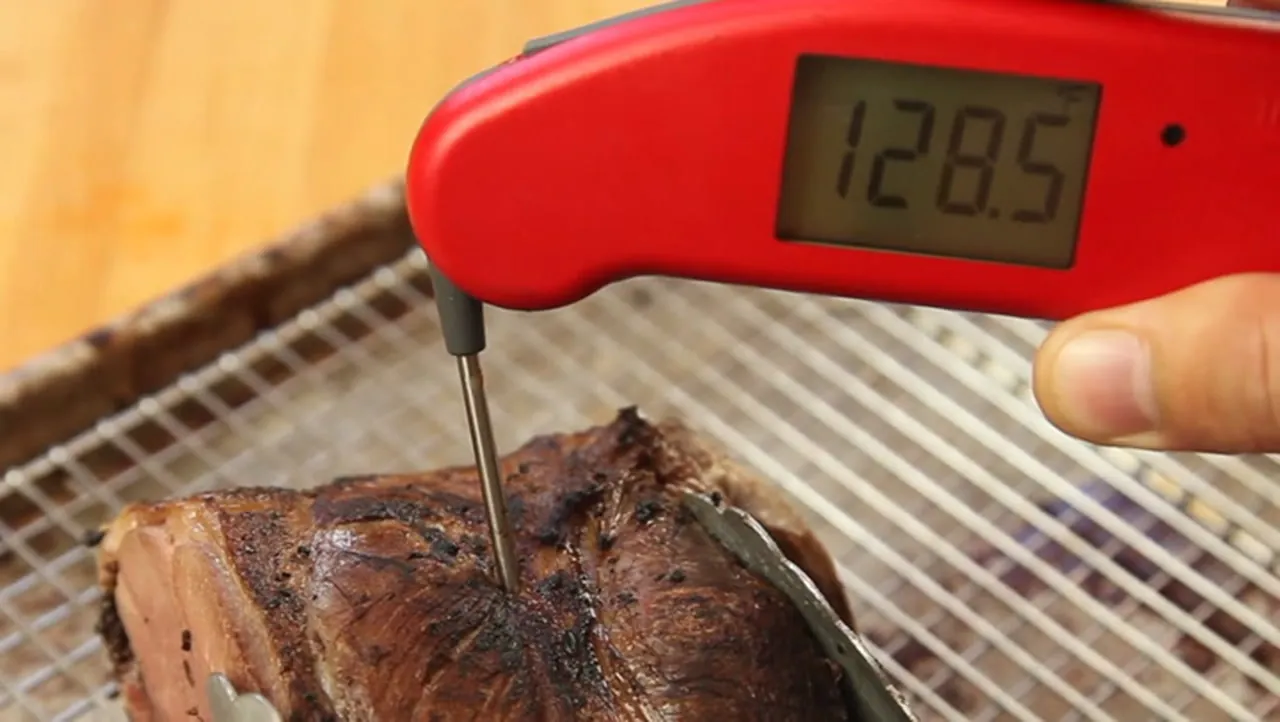
A thermometer tells you temperature, not doneness of texture. It won’t tell you if a stew is tender or if bread is baked through. For those, you judge by feel and time.
It also won’t save meat that’s already overcooked. If you’re past the target, the damage is done — no resting or sauce brings back the moisture. This is why I check early and often rather than trusting a timer.
Where it earns its place is lean meat you intend to serve pink: pork loin, duck breast, a lamb roast. Those go from right to ruined in a couple of minutes, and the difference is invisible from the outside.
So use it as a floor, not a ceiling. Pull at the low end of the range and let the meat rest. If the reading is already past target when you first check, you waited too long to start looking.
Related guides
Frequently Asked Questions
Can I leave the thermometer in the oven while the meat cooks?
Only if it’s an oven-safe probe model made for it. A standard instant-read thermometer will be damaged by oven heat. Check your model’s instructions before you try.
Is it safe to eat meat that’s a little pink?
Yes, if it hit the right internal temperature. Pink color comes from myoglobin and doesn’t tell you if meat is safe. Ground beef at 160°F can still look pink inside and be perfectly fine.
Do I need a different thermometer for grilling?
No, the same instant-read works. Just remember grill heat is uneven, so check two or three spots and trust the lowest number you find.
Conclusion
Buy one good instant-read thermometer and keep it where you can grab it fast. Start checking your chicken and roasts a few minutes before you think they’re done, and let the number — not the clock — tell you when to pull them.

I’m passionate about helping home cooks make everyday cooking easier, smarter, and more enjoyable. I share practical kitchen tips, cookware guides, cooking tutorials, and simple recipe inspiration based on real kitchen experience and modern home cooking needs.