
How to Tell If Chicken Is Fully Cooked Without a Thermometer
You can’t prove chicken is fully cooked without a thermometer, but you can get close. The juices should run clear, the meat should pull apart with a fork, and the thickest part near the bone should show no pink. Color is the weakest test on its own, so use all three signs together.
Pierce the thickest part of the thigh, not the breast, and let the juice run onto the plate. Pink-tinged juice means it needs more time. Clear juice with meat that still resists the fork means another few minutes. The two signs rarely disagree, but when they do, trust the fork.
A faint pink tinge near the bone in a young bird is normal and safe once the meat pulls cleanly. Pink meat that’s still springy or cool at the center is not. If you hit that, keep cooking.
Breast meat dries out fast, so check it two minutes before the thigh.
The Signs Most Home Cooks Rely On

I’ve watched home cooks poke chicken for years, and the ones who get it right every time use three checks, not one.
Clear juices. Cut into the thickest part and press down. The liquid that comes out should be clear, not pink or red. Pink juice means keep cooking.
Texture. Poke the meat with a fork. If it’s done, it should feel firm and the fibers should separate easily. Raw chicken feels springy and rubbery.
No pink meat. Cut to the bone on a thigh or breast. The meat right next to the bone should be white or light tan, never pink or red.
Tip: Bone-in pieces often stay pink near the bone even when they’re safe. Judge the meat, not the bone color.
Step-by-Step Without a Thermometer
- Pick the thickest spot. For a breast, that’s the middle. For a thigh, it’s near the bone. That’s the last part to cook.
- Cut deep with a knife. Go all the way to the center. You can’t judge doneness from the surface. Cut into a second spot if the first looks borderline — one glance can fool you.
- Press and watch the juices. Clear juice means close. Pink or cloudy juice means it needs more time. Blot the cut first; water on the surface can look pink and send you back to the pan for nothing.
- Check the color inside. White or light tan meat is done. Pink or red means keep going. Near the bone, a pink tinge is normal even when the meat is fully cooked — judge by texture there, not color.
- Poke with a fork. If it shreds easily, it’s ready. If it fights back, give it more heat.
- Rest for 5 minutes. The inside keeps cooking a little after you take it off the heat. Skip the rest and you’ll lose juice to the cutting board instead of the plate.
How Long Chicken Takes (No Thermometer)
| Cut | Heat | Time |
|---|---|---|
| Boneless breast | 375°F oven | 20–30 min |
| Bone-in breast | 375°F oven | 35–45 min |
| Thighs | 375°F oven | 40–50 min |
| Whole chicken | 350°F oven | 20 min per pound |
| Cubes (stir-fry) | High pan | 5–7 min |
Times shift with size, so always finish with the juice and color checks.
A thick boneless breast needs the full 30 minutes; a thin cutlet is done near 20. If you pounded it flat, start checking at 15.
Bone-in pieces run slower because the bone shields the meat closest to it. Judge those by the meat at the thickest point away from the bone, not the surface.
For a whole bird, use the label weight to estimate timing, and tent the breast with foil once it browns so it doesn’t dry out before the thighs catch up.
Cubes overcook in seconds. Pull them as soon as the center is opaque and the juices run clear.
When These Signs Can Fool You
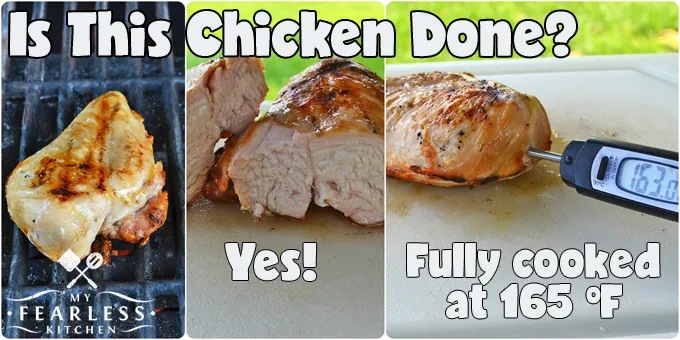
Color alone isn’t reliable. Young chicken can look pink even when it’s safe, and older birds can look white before they’re ready. The USDA says the only way to be sure is a food thermometer reaching 165°F in the thickest part.
That pink is most common near the bone and in the thigh joint, where the meat sits close to a bone that heats slower than the rest. A bird pulled at the right temperature can still show it. The same meat is often the last to finish, which is why the reading matters more than the shade.
Tip: If you cook chicken often, keep a cheap instant-read thermometer in the drawer. It’s the one tool that never lies.
If the meat is white, the juices are clear, and it shreds easily, you’re as close to certain as you can get without one.
Related guides
- Can You Cook Raw Chicken in an Air Fryer?
- Can I Wrap Chicken in Foil in an Air Fryer?
- How to Cook Chicken in an Air Fryer With Oil
Frequently Asked Questions
Can I tell by the color of the bone?
No. Pink near the bone is common in young birds and doesn’t mean it’s raw. Check the meat itself, not the bone.
Is it safe to eat chicken that’s slightly pink?
Only if it reached 165°F. Pink meat can still be safe, and white meat can still be undercooked. Without a thermometer, you’re guessing.
Does clear juice always mean it’s done?
Mostly. Clear juice is a strong sign, but the safest habit is to pair it with firm texture and white meat.
Conclusion
Next time you roast or pan-cook chicken, cut into the thickest part before you serve it. If the juices run clear and the meat pulls apart, you’re good to go. If anything looks pink or feels rubbery, give it five more minutes and check again.

I’m passionate about helping home cooks make everyday cooking easier, smarter, and more enjoyable. I share practical kitchen tips, cookware guides, cooking tutorials, and simple recipe inspiration based on real kitchen experience and modern home cooking needs.